Loading...
Serving Moreno Valley, CA and surrounding areas. (951) 910-7350
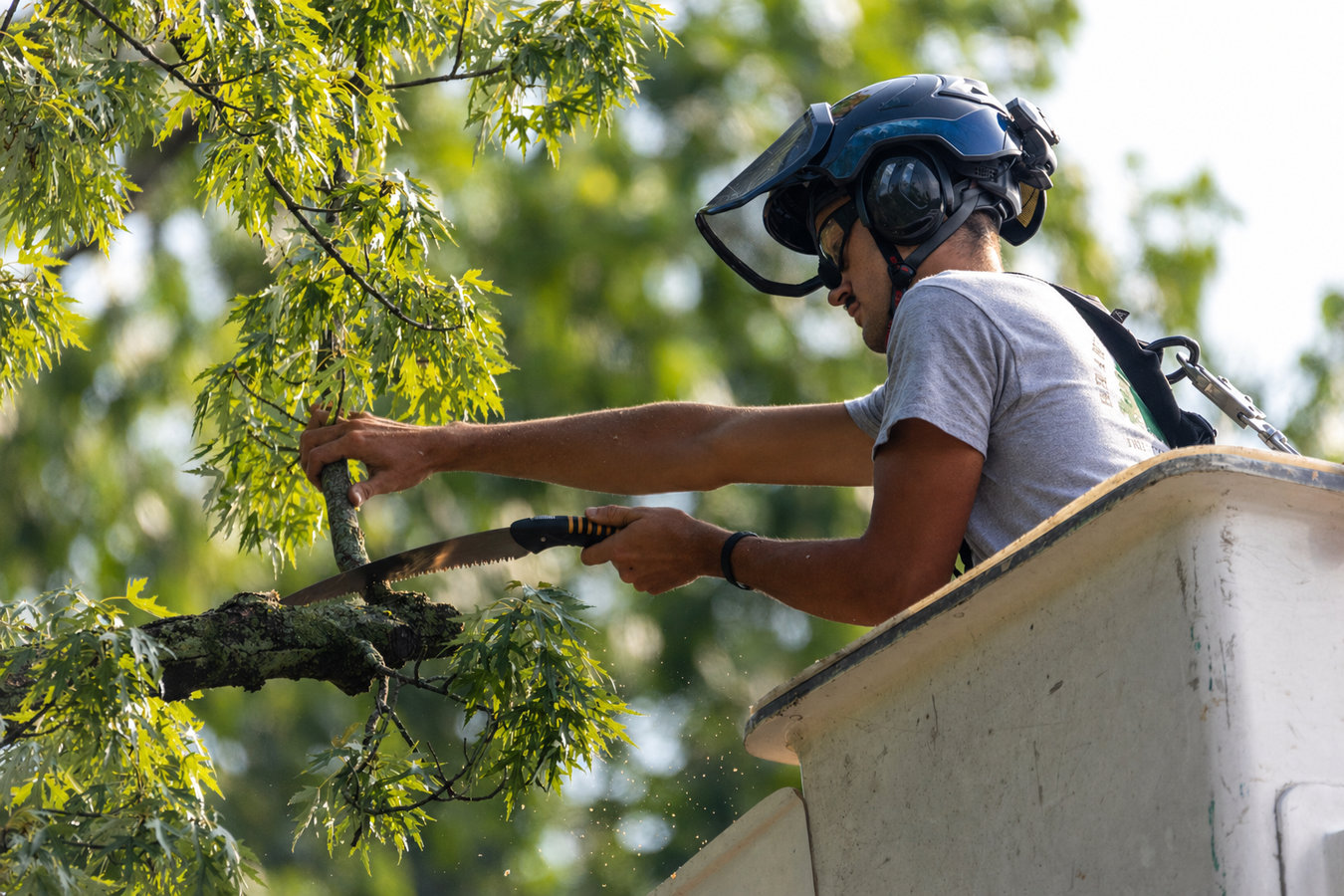
Moreno Valley Tree Services handles tree pruning, removal, and trimming for Redlands properties of all ages - from century-old Victorians to newer homes on the east side of the city. We have served the Inland Empire since 2020 and reply to estimate requests within 1 business day.
Redlands has one of the largest collections of Victorian-era homes in Southern California, and the mature trees on those properties have often grown for 80 to 100 years without structural correction. Our tree pruning service addresses co-dominant stems, unbalanced crowns, and deadwood that build up silently until the first strong wind event exposes the risk.
When a tree on a Redlands property has decayed beyond saving or is positioned too close to a foundation, sewer line, or historic structure to manage safely, removal is the right call. We work carefully on older properties with narrow lots and mature landscaping to avoid damaging surrounding features that took decades to establish.
Redlands summers push temperatures past 100 degrees Fahrenheit, and the intense heat dries out canopies and accelerates the die-back of weakened branches. Annual trimming before the Santa Ana season reduces the dead wood that makes trees on Redlands properties vulnerable to high-wind branch failures each fall.
Many older Redlands properties have stumps from trees removed years ago that were left to decay in the expansive clay soils. Those stumps and their root masses continue to shift with the seasonal wet-dry cycle, which can push up nearby hardscape long after the tree itself is gone. Grinding to below grade solves the problem at its source.
Properties near downtown Redlands and around the University of Redlands often have large-diameter stumps from specimen trees that were planted in the early 1900s. Full stump and root extraction clears the area completely for new planting or hardscape work, which grinding alone cannot accomplish.
Santa Ana wind events hit Redlands every fall, and the older trees on Victorian and Craftsman properties - many of which have never been structurally pruned - are the most vulnerable. When a branch or trunk comes down on your structure or blocks access, we respond quickly to make the site safe.
Redlands was founded in the 1880s during the citrus boom and grew rapidly through the early 1900s. Many of the homes built during that era are still standing, and the trees planted with them have been in the ground for 80 to 100 years. Trees of that age on Victorian, Craftsman, and early 20th-century bungalow properties have often never received structural pruning - they were planted in an era when tree care meant occasional limb removal after a storm, not proactive crown management. The result is canopies with co-dominant stems, included bark, and deadwood that builds to the point of hazard without necessarily looking alarming from the street. By the time visible decay shows at the base or a major limb drops, the underlying problem has typically been developing for years.
The clay soils throughout Redlands compound the long-term risk. These soils expand when wet and shrink when dry, and the seasonal movement gradually loosens root anchorage in trees that have been in place for decades. Homes built before 1940 often sit on foundations that predate modern engineering standards, and roots from large trees can apply sustained pressure to those older foundations over time. The City of Redlands historic preservation program protects many of the homes in these older neighborhoods, which means tree work on or near protected properties requires careful coordination to avoid unintended damage to features that cannot be easily replaced.
Our crew works throughout Redlands regularly, and we understand the local conditions that affect tree service work here. The city sits at about 1,300 feet elevation - higher than most Inland Empire cities - and the slight elevation difference means winter frost is a real occurrence, not just a theoretical risk. Frost events cause surface cracks in older concrete driveways and walkways on Redlands properties and can damage the cambium layer of thin-barked trees during cold snaps, which shows up as bark splitting or dieback in the canopy the following spring.
Redlands neighborhoods near the University of Redlands and the historic downtown district have some of the largest and most architecturally significant properties we work on. Many of those homes have mature oaks, California sycamores, and large-diameter specimen trees that require a more measured approach than standard residential work. We take extra time on these sites to protect surrounding hardscape, garden features, and the historic fabric of the property itself. The walkable streets near the University of Redlands and the Kimberly Crest neighborhood are areas where tree canopy is part of what makes the blocks distinctive, and we work to preserve that character wherever the health of the tree allows.
We serve neighboring San Bernardino to the west as well, where a very different mix of property ages and housing types creates different tree service needs. If you own or manage properties in both cities, we can coordinate efficiently across locations.
Call us or submit a request online. We reply within 1 business day and schedule a free on-site visit. If the situation involves a fallen branch or active hazard, call directly for the fastest response.
A crew lead visits your Redlands property, assesses the tree and the surrounding area, and provides a firm written quote. This is when we also flag any City of Redlands permit requirements so there are no surprises before work begins.
We arrive with the equipment your specific job requires. Work on older Redlands properties with mature trees typically takes longer than comparable work on newer homes, and we build that into the estimate so the timeline is accurate from the start.
Debris is chipped and hauled away before the crew leaves. We walk the yard with you to confirm everything is as agreed - on an older property with established landscaping, this step matters more than on a blank suburban lot.
We serve Redlands homeowners with licensed, insured crews who understand historic properties and mature trees. Get a free on-site estimate with no obligation.
(951) 910-7350Redlands is a mid-sized city of about 73,000 to 75,000 people in San Bernardino County, located about 60 miles east of Los Angeles along the I-10 freeway. The city was founded in the 1880s as a citrus-farming community and grew quickly through the early 1900s, leaving behind a downtown district and residential neighborhoods filled with Victorian mansions, Craftsman bungalows, and Spanish Colonial Revival homes that are well-preserved by Southern California standards. The Kimberly Crest House and Gardens - a Victorian mansion built in 1897 - is one of the most recognized landmarks in the city and sits on a hillside that is representative of the older residential character found throughout the western part of Redlands.
The University of Redlands, founded in 1907, anchors the central part of the city and contributes to a stable, owner-occupied population that tends to invest in home maintenance over the long term. About 60 percent of Redlands housing units are owner-occupied, which translates to consistent demand for property upkeep including tree care. Newer subdivisions on the north and east sides of the city have stucco ranch homes and tile roofs typical of Inland Empire construction from the 1990s onward - a different set of tree situations than the older neighborhoods, but served by the same team. Neighboring San Bernardino lies just to the west, and Hemet is accessible via the San Jacinto Valley corridor to the southwest. Both are part of our regular service territory.
Older trees on historic properties need regular attention to stay safe through Santa Ana season. The sooner you call, the more options you have before a problem becomes an emergency.